You’ve already put in the time on your mat, now let’s backfill all that space with some real deal strength.
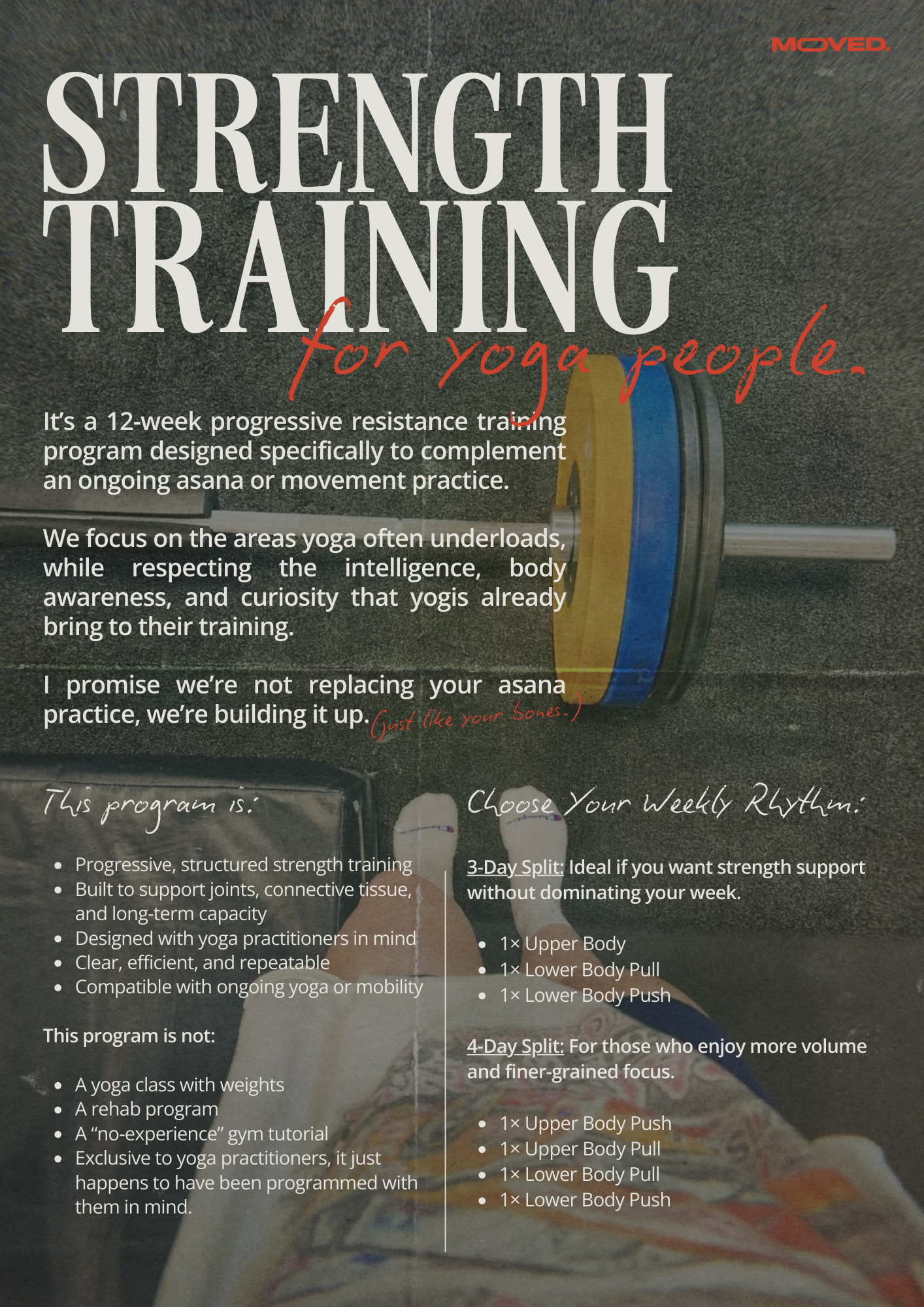
Strength for Yoga People is 24-week progressive resistance training program designed specifically to complement an ongoing asana or movement practice (and honestly, any movement practice you love).
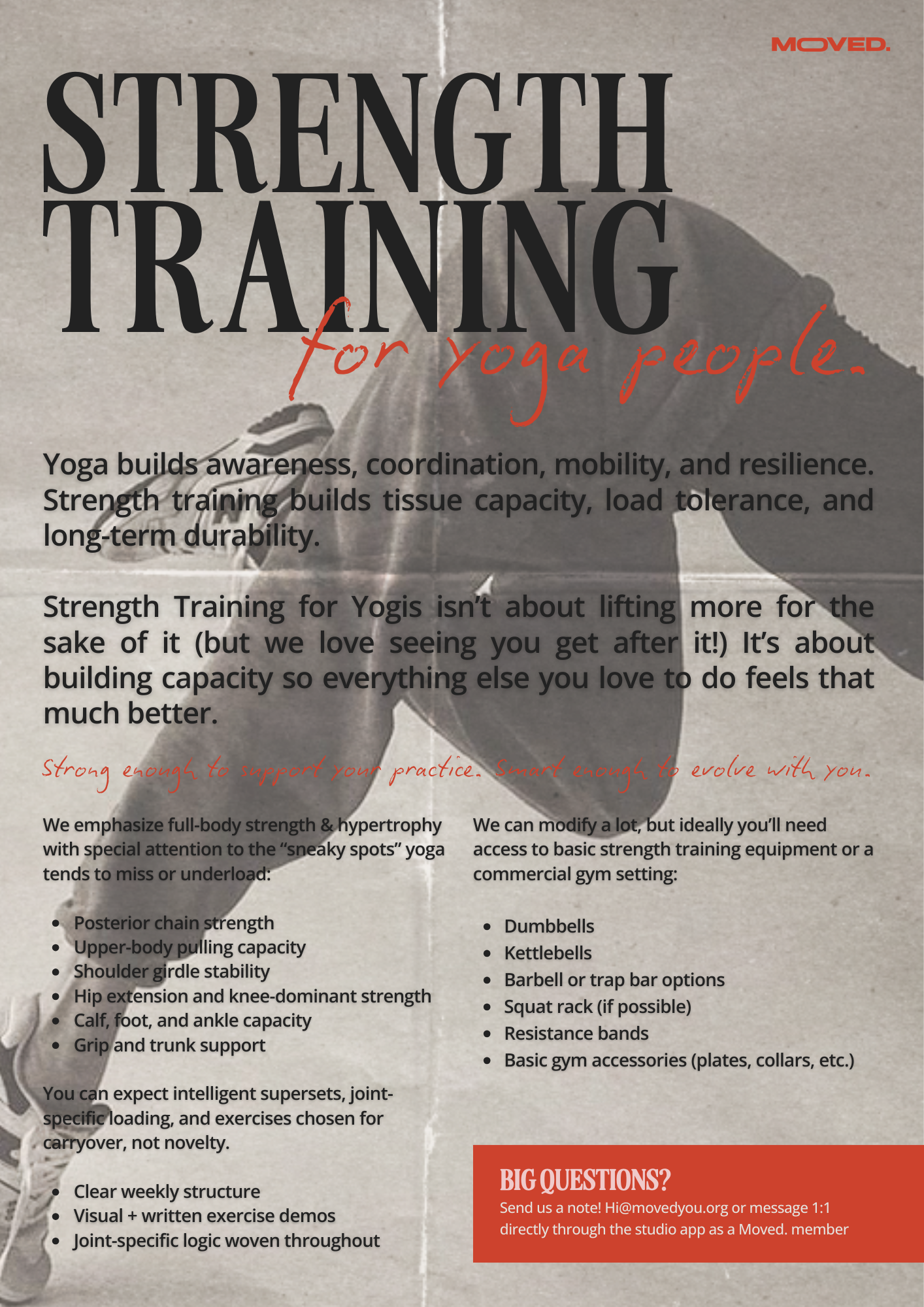
We focus on the areas yoga often underloads, while respecting the intelligence, body awareness, and curiosity that yogis already bring to their training.
The program runs in two 12-week blocks:
SFYP 1.0
The first 12 weeks build your foundation from the ground up: loaded movement patterns, connective tissue capacity, and your first real relationship with compound lifts.
SFYP 2.0
Then we pick up right where you left off and takes everything further: heavier loads, barbell progressions (for the gym folks), block periodization, and a final real-deal-get-after-it phase that will genuinely surprise you.
I promise we're not replacing your asana practice, we're building it up. (just like your bone density)
This program is not:
A yoga class with weights
A rehab program
An absolute zero-experience full blown gym tutorial
Exclusive to yoga practitioners, it just happens to have been programmed with them in mind
This program is:
Progressive, structured strength training across two 12-week blocks
Built to support joints, connective tissue, and long-term capacity
Designed with yoga practitioners in mind (but not exclusive to them)
Clear, efficient, and repeatable
Compatible with ongoing yoga or mobility
Possible to do at the gym or at home
ready to get moving?
All programs are available for individual purchase or as a part of any Moved.Studio membership
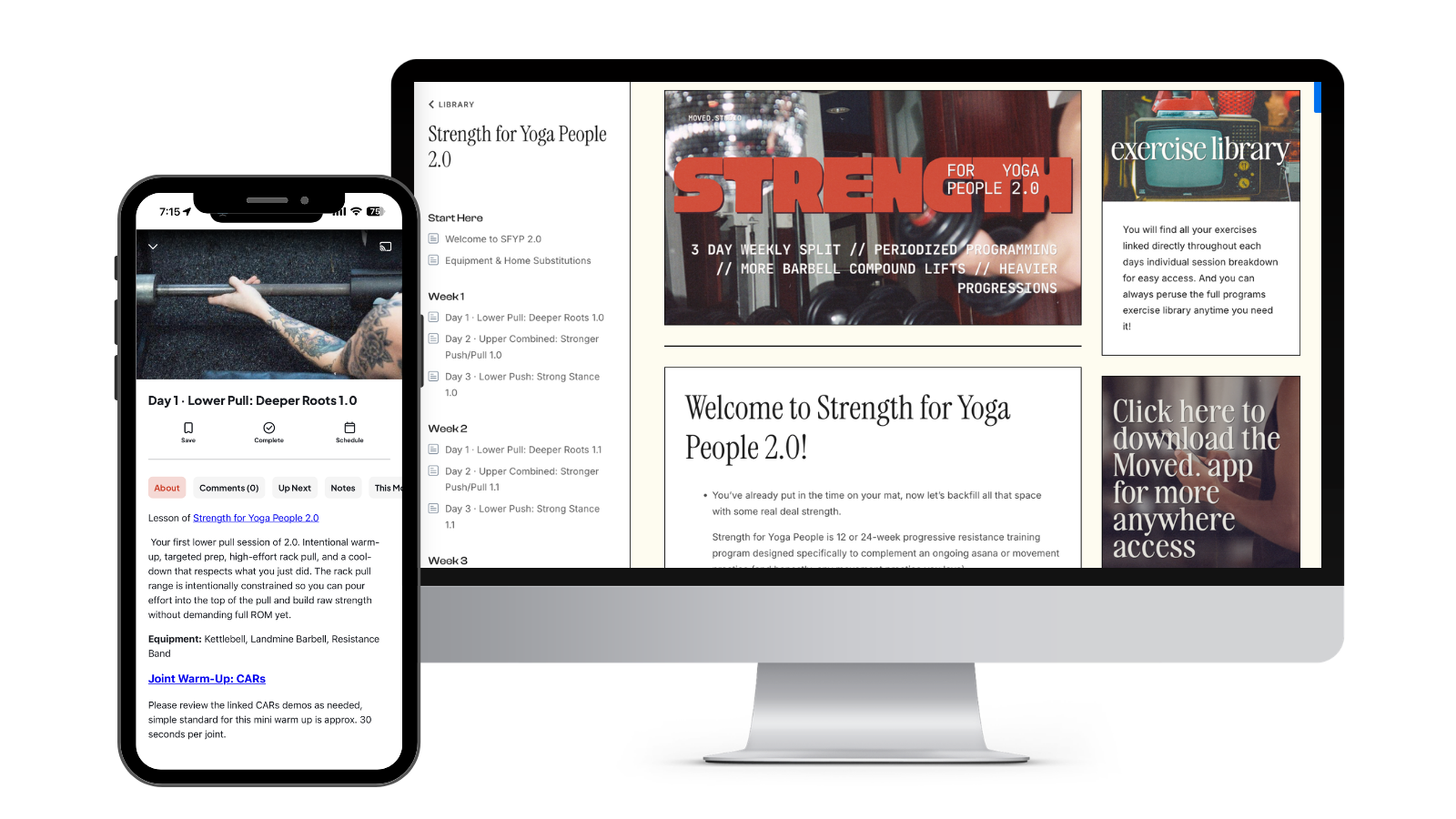
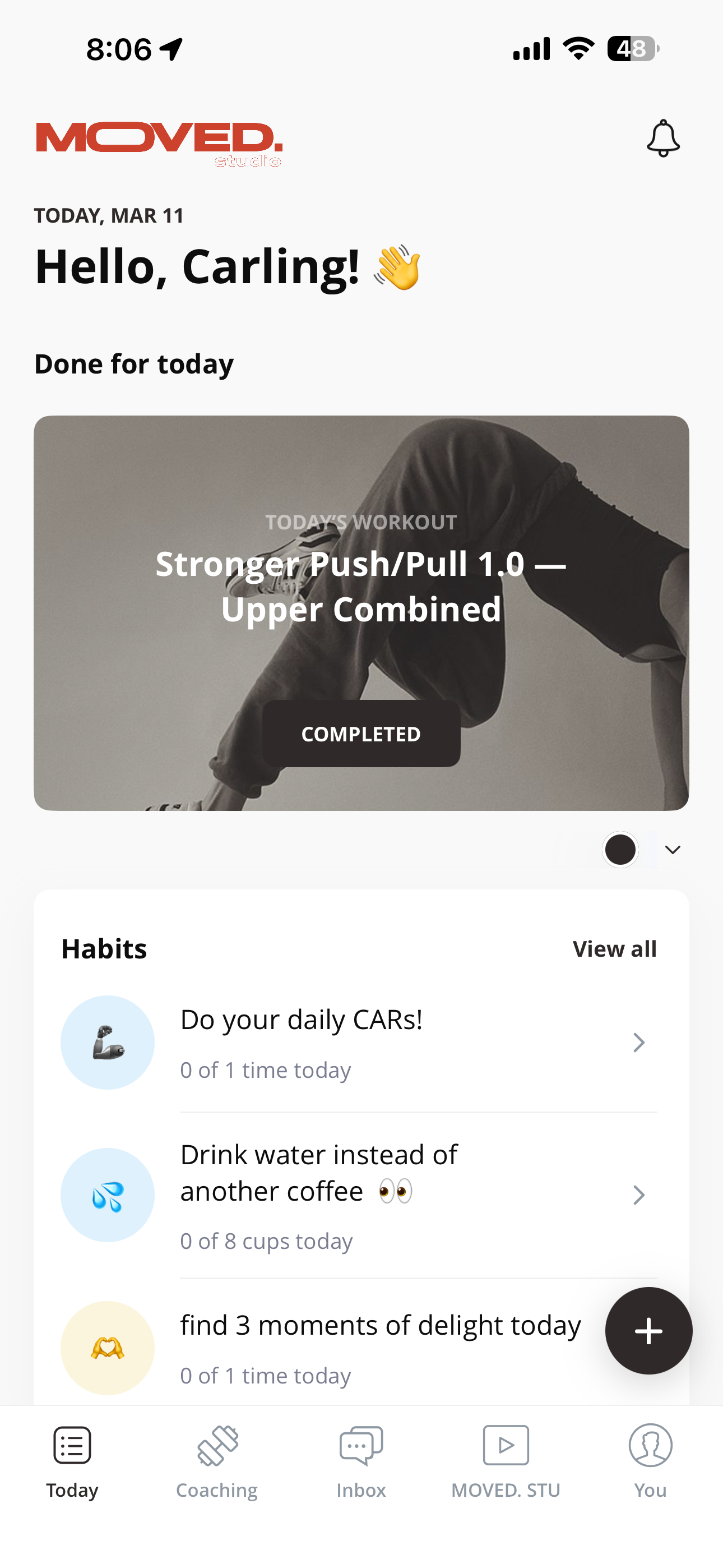
Get rid of the guesswork and let the Moved. app manage your daily training and your full movement calendar.
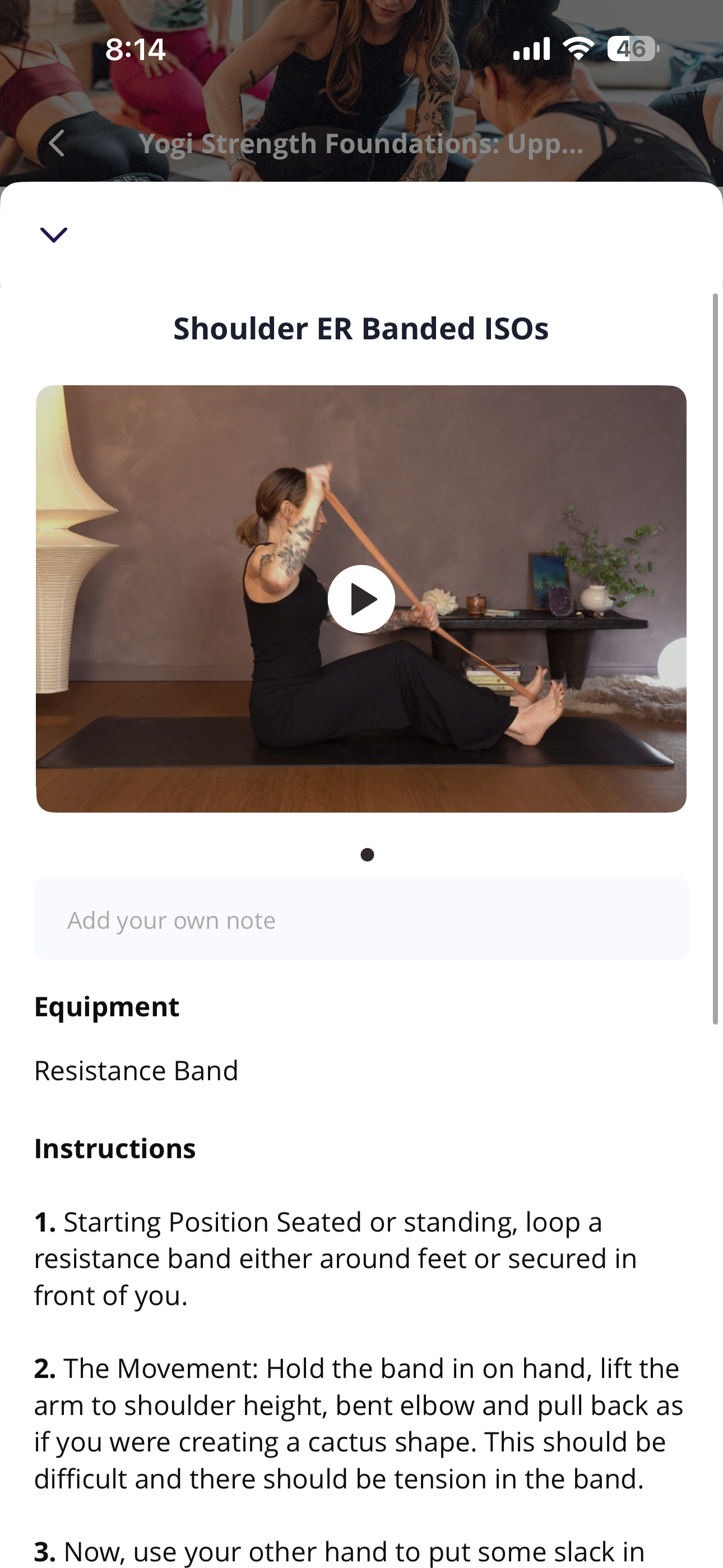
Breakdowns, demo videos, and clear structured sessions to keep you on track!
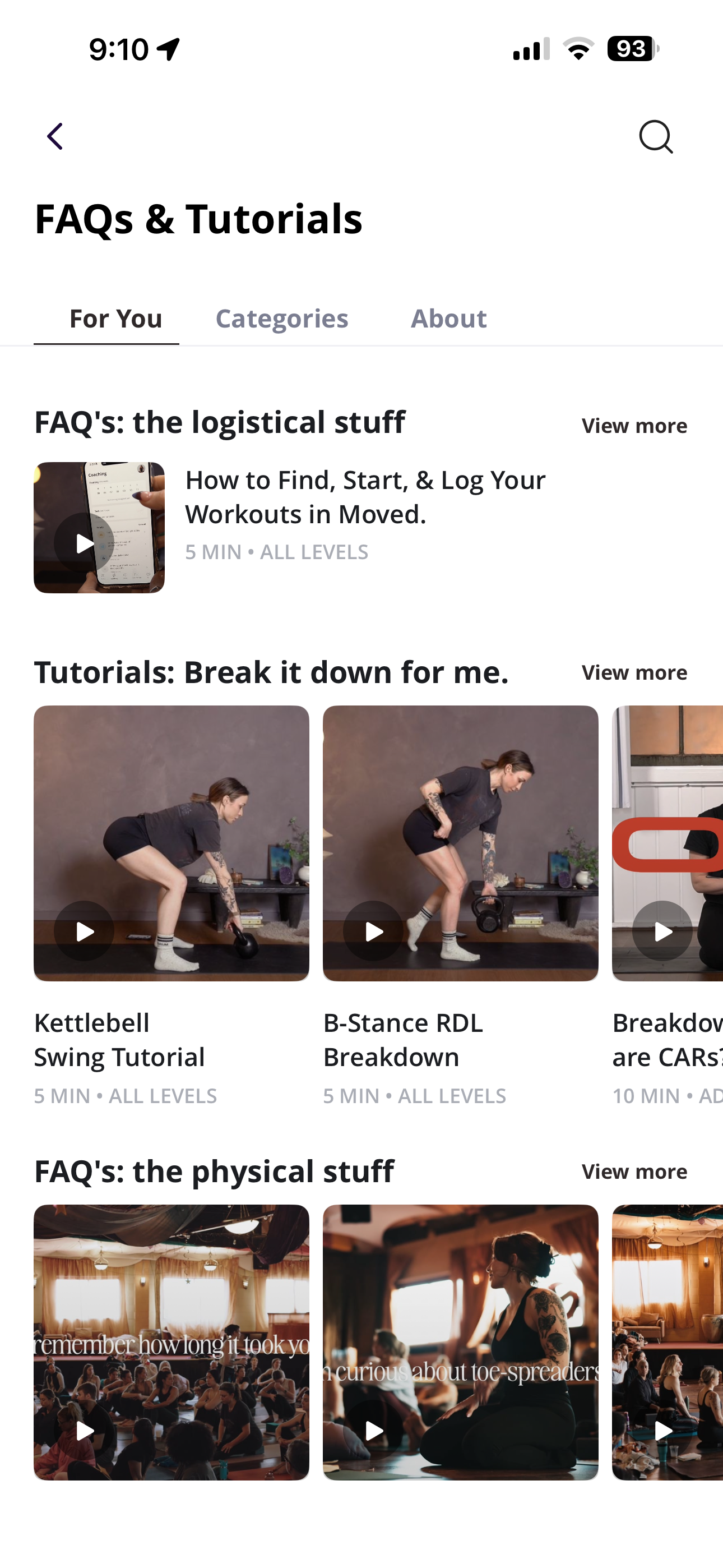
Everything you need to support your strength journey all in one place 📱
Questions? We’ve got you.
-
We recommend it, because 1.0 builds the specific movement patterns, connective tissue capacity, and loading baselines that 2.0 is designed to progress from. That said, if you have a solid existing strength training background and you're comfortable with compound lifts like deadlifts, squats, rows, and presses, you can start at 2.0 with some self-awareness about where you're entering. Just know that 2.0 assumes familiarity with the session format, CARs warm-ups, and the RPE/tempo system. If any of that sounds unfamiliar, start at 1.0. It's 12 weeks well spent.
-
Both! There are substitutions throughout all the workouts and the loading principles, RPE targets, tempo, rest, and progression are identical regardless of which track you follow. The only thing that changes is the implement.
However, for home training, you'll want a solid set of heavy dumbbells, a kettlebell or two, and a set of resistance bands. This is not a body weight or light dumbbells type of program so that level of home-based equipment is required.
If you’re heading the the gym, the any basic commercial gym should have everything you need.
-
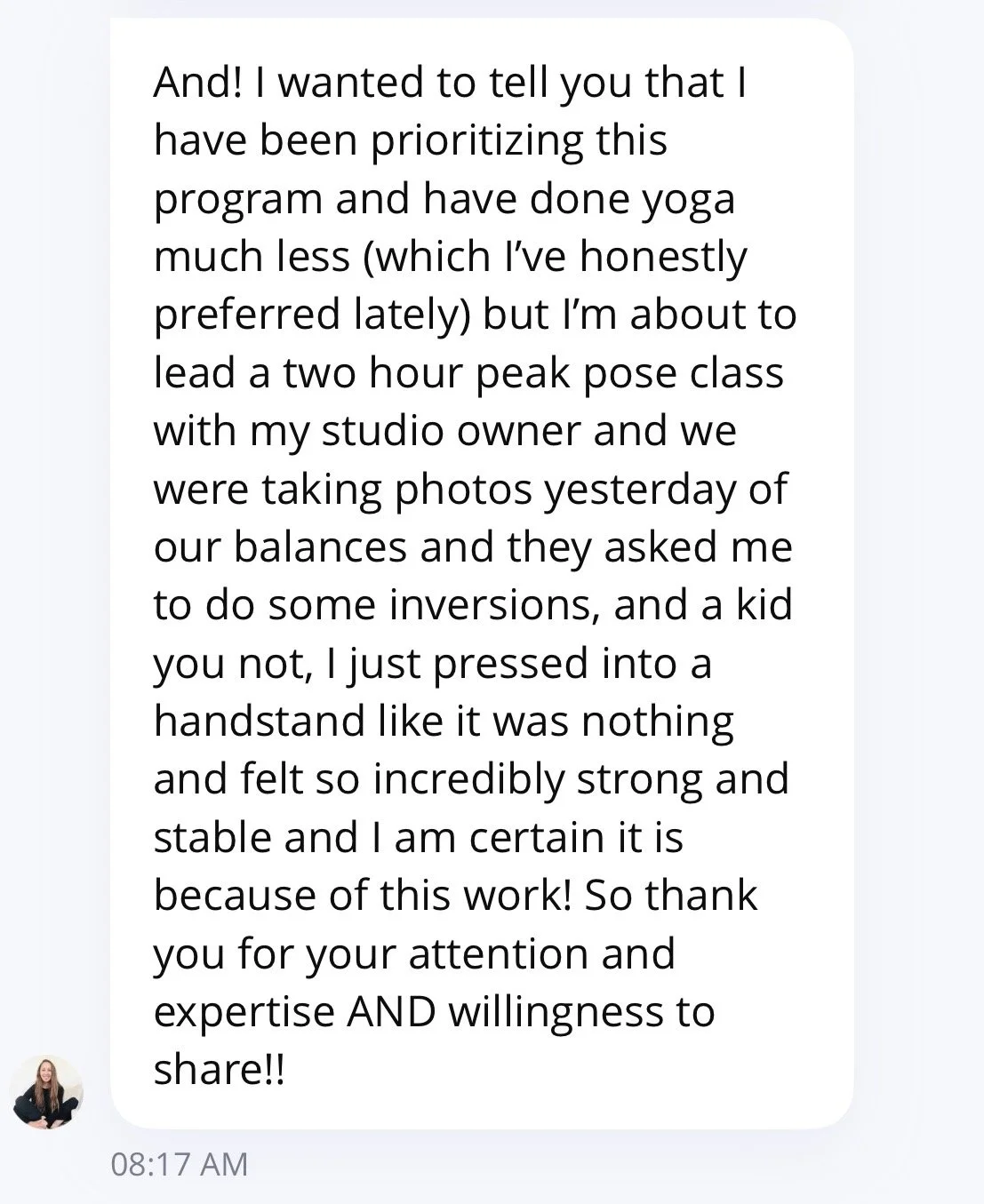
That's literally why it exists. The program runs 3 days a week (with a 4-day option if you want it), and we recommend scheduling training days with a 24–48 hour buffer from intense yoga practices. Most folks find a Mon/Wed/Fri or Tue/Thu/Sat rhythm works well. Sessions are about 60 minutes. This program was built to complement your practice, not compete with it, and you will almost certainly notice a difference on your mat pretty quickly (stronger balances, more stable inversions, stuff like that).
-
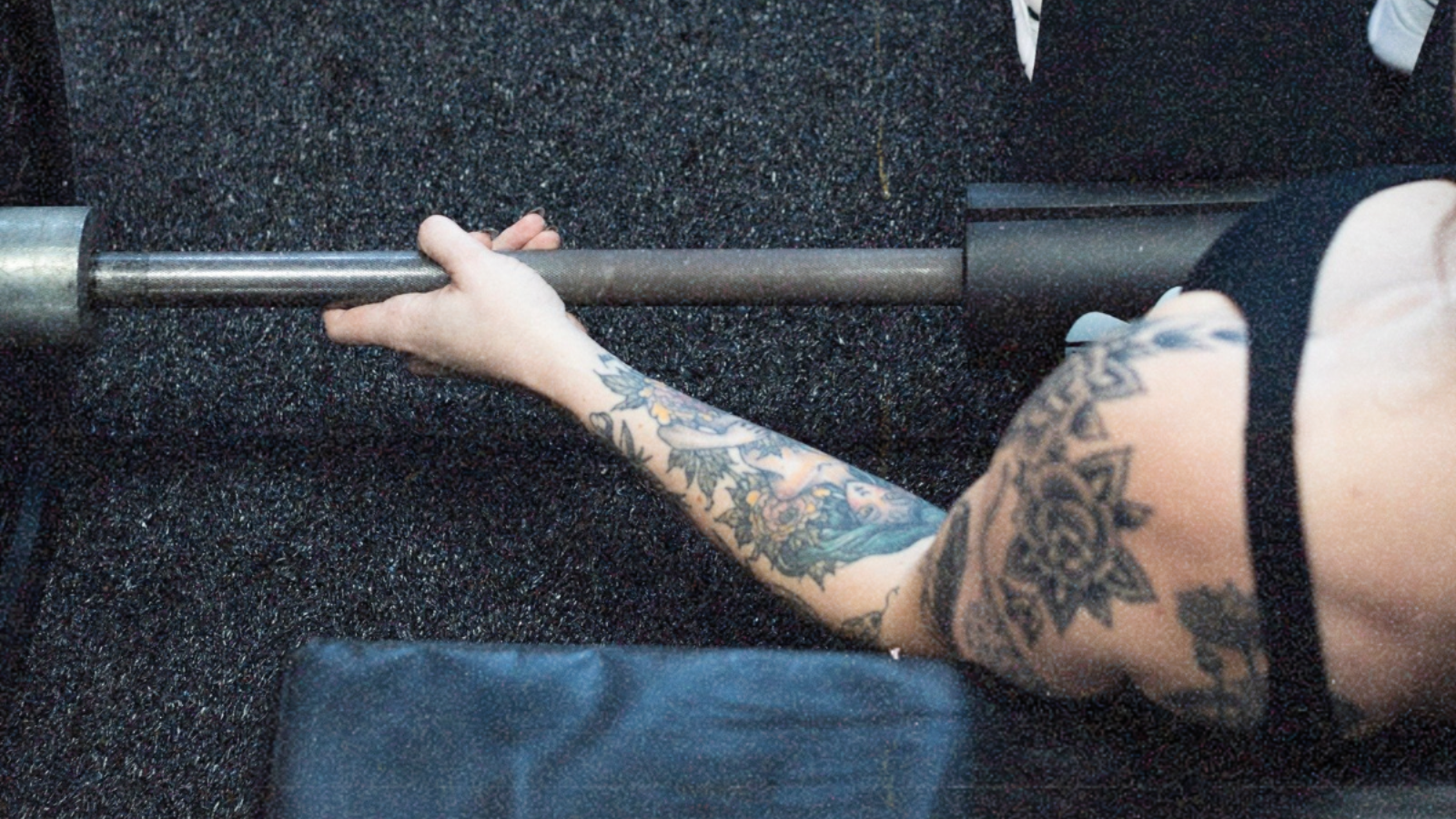
For gym training: access to a basic commercial gym with dumbbells, kettlebells, resistance bands, and ideally a barbell/trap bar and squat rack. In 2.0, barbell work becomes more prominent (conventional deadlift, back squat, bench press) but every barbell exercise has a home alternative.
For home training: a solid set of heavy dumbbells (emphasis on heavy, especially by 2.0), a kettlebell or two, and resistance bands. A foam roller is also great to have. That's genuinely it.
-
Good news: 1.0 is almost entirely dumbbell, kettlebell, and band-based, with barbell/trap bar work introduced gradually in Phases 2 and 4. By the time 2.0 introduces the conventional deadlift, back squat, and bench press, you've already spent 12 weeks building the movement patterns, the connective tissue capacity, and the confidence to handle them. And if the barbell still doesn't feel like yours yet in 2.0? The home version is always an acceptable fallback on any session where the barbell pattern doesn't feel owned. Never load what isn't controlled.
-
Every session follows the same structure across all 24 weeks:
Joint Warm Up (CARs) (8–10 min): Controlled articular rotations. This is your daily internal assessment, full body, every joint.
Global Warm Up (5–8 min): Movement-based activation specific to that day's focus.
Primers (5–8 min): Low-load, high-quality activation work to prime target tissue.
Primary Work (20–25 min): Your main compound lifts. Highest neural demand, freshest state.
Secondary Work (15–20 min): Supporting patterns and volume accumulation.
Cool Down (5 min): Breath-led, yoga-informed, parasympathetic reset. Non-negotiable.
Total session time is about 60 minutes, and every section has a purpose. Nothing is filler.
-
1.0 uses linear periodization (meaning the load increases gradually across the full 12 weeks in a fairly straight line) and is focused on building your foundation: learning the patterns, developing connective tissue tolerance, and getting your nervous system comfortable with loaded compound movement. The exercises are predominantly dumbbell, kettlebell, and band-based, with some barbell and trap bar work introduced in the later phases.
2.0 uses block periodization (meaning each phase has a distinct training goal and the program cycles between intensification and realization). The loads are heavier, the exercise progressions are more advanced, and barbell work becomes a central feature for gym clients. The power phase in 2.0 pushes into 90% 1RM territory, which is well beyond anything in 1.0. But the session format, the CARs, the cool-downs, the joint-specific logic? All the same. It still feels like your program. Just stronger.
-
CARs stands for Controlled Articular Rotations, and they come from the Functional Range Systems (FRS) framework. Basically, you take every major joint in your body through its full range of motion with maximum muscular tension. It takes about 8–10 minutes, and it serves as both a warm-up and a daily assessment of what your body has available today. If something feels restricted, you know before you start loading it. Think of it as checking in with every joint before asking it to do work. Yoga people tend to love CARs, by the way, because it scratches a similar itch to what you already do on the mat, just with a very different intention.
-
The entire program is built around the principle of progressive overload, which means you are never asked to do something your body hasn't been prepared for. Every phase builds on the one before it. The loading starts light and increases gradually (there's a "Rule of Two" system in 1.0 that helps you figure out when to go up in weight). There are deload weeks built into both 1.0 and 2.0 specifically for recovery and tissue adaptation. The program includes detailed tempo prescriptions, rest recommendations, and cueing for every single exercise.
The Strength training philosophy at Moved. utilizes a mixture of conventional S&C principles, mixed with a mobility-forward, Internal Strength approach that incorporates strength and nervous system based mobility work into your supersets and sessions. The aim is is never to just get good at weightlifting - its to keep your joints doing what healthy joints do - move freely and with control, and your tissues resilient enough to keep doing the things you love for a very long time.
-
You can! But we'd gently suggest finishing what you're in first (especially if it's SFYP 1.0, for obvious reasons). Strength training programs are designed to build on themselves week over week, so hopping in mid-cycle means you'll miss some of the connective tissue preparation and loading progressions that make the later phases both safe and effective. If you're finishing up another Moved. program and want to roll right into SFYP 2.0, that's a great transition. Just give yourself a few days between programs to reset.
-
Each session is laid out in a clear written format with linked video demos to the in-app Exercise Library.
You will also find a notes section in your Moved.Studio app where you can log all your progress, notes, or substitutions for later access.